
Your child learned “half” at home, as something you do to a cake, and learned “a quarter” at school, as a shape with one piece shaded. Nobody ever told them those are the same kind of thing. So they have two unconnected systems: sharing, which is an action they are fluent in, and fractions, which are pictures of circles. Asking for a quarter of twelve sits in the gap between them.
What it looks like at the kitchen table
Ask “what is half of 12?” and you get 6 in about half a second, without any working.
Ask “what is a quarter of 12?” and you get one of three things: a long silence, “6” again because half is the only move they have, or “4”, which is them handing you back the number from the bottom of the fraction.
Now the question that makes the whole thing obvious. Ask “what is half of half of 12?”
Almost every child who failed the quarter question answers 3, immediately and correctly. That is the entire diagnosis in one exchange. They are not missing the arithmetic. They are not missing the concept. They can already do it. They simply do not know that the thing they just did is what the word “quarter” means.
This is a vocabulary problem wearing a math problem’s clothes, which is why it responds so fast to the right twenty minutes and so badly to more worksheets.
Why the wrong setup survives so long
Half is domestic and everything else is academic. A child hears “half an hour”, “half the cake”, “half of it is mine” from about age three, hundreds of times, always as an action performed on a real thing. They arrive at school already fluent.
Then school introduces fractions with shapes. Circles divided into quarters, rectangles divided into thirds, one piece shaded. That is a perfectly reasonable way to teach what a fraction is, and it almost never asks the question “how many is a quarter of twelve”. The child ends up able to shade a quarter of a circle and unable to find a quarter of a number, and those look so different that nobody notices they are the same idea.
The gap also hides because halving covers so much. A child whose only tool is halving can correctly find a half, a quarter and an eighth of most numbers by halving repeatedly. That is three of the fractions they meet most often, so they look fine right up until somebody asks for a third, which cannot be reached by halving at all.
The reteach, in twenty minutes
You need twelve small objects. Counters, coins, pasta, blocks, anything countable. Not a worksheet, and not a drawing of a circle.
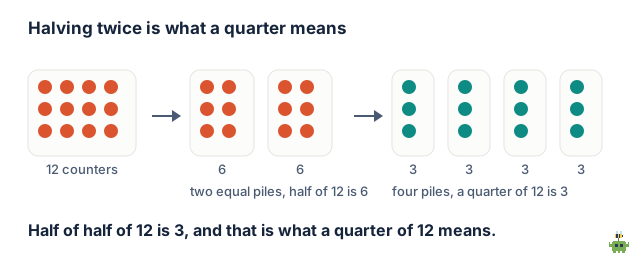
- Minutes 0 to 4: start where they are strong. Twelve objects on the table. “Share these into two equal piles.” They will do it without hesitating. Six and six. Say: that is a half. Then: “now split each of those piles into two.” Four piles of three.
- Minutes 4 to 8: name what they just did. Point at the four piles. “How many piles?” Four. “That is why it is called a quarter. A quarter of twelve is three.” Watch for the moment it lands, because it usually lands here, visibly, and the child often says something like “is that all it is?”
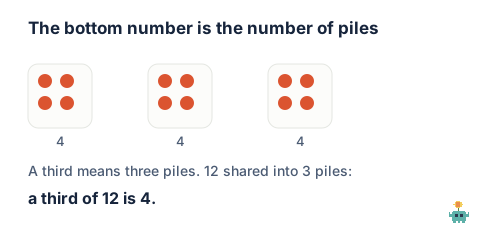
- Minutes 8 to 13: the rule, stated once. The bottom number tells you how many piles to make. A quarter means four piles. A third means three piles. A fifth means five piles. Say it, then do a third of 12 straight away with the objects: three piles, four in each. This is the important minute of the whole lesson, because a third is the first fraction that halving cannot reach, and it is where you find out whether the rule took.
- Minutes 13 to 20: mix, and go up. A fifth of 20. A third of 15. A quarter of 20. Then, once, a harder one to show the rule is general: two thirds of 12. Make three piles, take two of them, eight. Do not teach a method for that, just show that the piles idea keeps working.
The thing not to do: do not teach “a quarter means divide by 4” as the first move. It is true, it produces right answers, and it rebuilds exactly the disconnect you are trying to close. Divide-by-4 is a shortcut worth having, and it should arrive after the child has made four piles with their hands, not instead of it.
Three questions that tell you what to do next
Ask these cold, in this order. Where they stop tells you which lesson you actually need.
“What is half of 12?”
If this is slow or wrong: stop. The problem is not fractions, it is sharing and equal groups, and that is a different and more basic piece of work. Do halving with real objects for a week before going near the word quarter.
“What is half of half of 12?”
If they answer 3 quickly: excellent, and this is the common case. The machinery is all there and you have a naming problem. The twenty minutes above will genuinely fix it, probably in ten.
If they cannot do this either: they are not holding the first answer while working on the second. Do it with objects rather than in their head, and the difficulty usually disappears, because it was memory rather than math.
“What is a third of 12?”
If they say 6, or 4, or freeze: this is the one that matters most, and it is the reason not to stop the lesson once quarters work. They are still running on halving, and halving cannot produce a third. The fix is minute 8 to 13 above, done slowly: the bottom number is the number of piles.
If they get 4 by making three piles: you are finished. That is the whole idea, and quarters, fifths and everything else now follow without further teaching.
Where this sits in what schools teach
The US standard that introduces this is a grade 3 one, and its wording is almost exactly the lesson above. It asks children to understand a fraction as the quantity formed by 1 part when a whole is partitioned into b equal parts.
Strip the formality and that says: the bottom number tells you how many equal parts to break it into, and the fraction is one of them. Piles on a table. The standard is not describing a picture of a circle, it is describing an action, and the reason children arrive in grade 4 or 5 unable to find a quarter of a number is almost always that they met the picture and never the action.
It matters more than it looks, because this is the idea grade 4 and grade 5 build directly on top of. Grade 4 asks children to multiply a fraction by a whole number, and grade 5 asks them to multiply a fraction by a fraction, which is the same “of” you just taught with counters. A child who never connected “a quarter of 12” to “one quarter times 12” will treat those as two unrelated topics and will find grade 5 much harder than it needs to be.
For where it falls in the year, see the grade 3, grade 4 and grade 5 math guides. If percentages are also going wrong, they are downstream of this same idea: why percentages are not landing.
The short version
Ask for half of half of 12. If you get 3, your child can already do this and just does not know the word for it, which is a twenty-minute problem and not a math problem.
Twelve objects, two piles, then four piles, then name it. Then teach the sentence that generalizes it, which is that the bottom number tells you how many piles to make. Then immediately do a third, because thirds are the test: halving gets a child through quarters and eighths while hiding the fact that they never learned the idea at all.
Sprout Lessons builds standards-aligned lessons for grades K–12, including targeted practice on fractions of a quantity. Start free.
FAQ
Why can my child do half of a number but not a quarter?
Because they learned half at home as an action performed on real things, from about age three, and learned quarter at school as a shape with one piece shaded. Nobody ever told them those are the same kind of thing, so they hold two unconnected systems: sharing, which they are fluent in, and fractions, which are pictures of circles. Asking for a quarter of twelve falls into the gap between them.
How do I tell whether it is a math problem or a vocabulary problem?
Ask what half of half of 12 is. Almost every child who could not answer the quarter question answers 3 immediately and correctly, and that is the whole diagnosis. The arithmetic is there, the concept is there, they can already do it. They just do not know that the thing they did is what the word quarter means, which is a naming problem and responds to about twenty minutes rather than more worksheets.
Why should I test thirds rather than quarters?
Because halving hides the gap. A child whose only tool is repeated halving can correctly find a half, a quarter and an eighth of most numbers, and those are three of the fractions children meet most often, so they look fine for a long time. A third cannot be reached by halving at all. If a third of 12 gets 6, or 4, or a blank look, the halving strategy is doing all the work and the real idea is still missing.
Should I just teach my child that a quarter means divide by four?
Not first. It is true and it produces correct answers, and it rebuilds exactly the disconnect you are trying to close, because it gives a rule with no meaning underneath. Have the child make four piles with their hands and count them, so the bottom number of the fraction is visibly the number of piles. Divide by four is a shortcut worth having afterwards, not instead.
Where does this sit in what schools teach?
It is introduced by a grade 3 standard whose wording is almost exactly the counters lesson: understand a fraction as the quantity formed by one part when a whole is partitioned into equal parts. That describes an action, not a picture of a circle, and children who arrive in grade 4 or 5 unable to find a quarter of a number have usually met the picture and never the action. Grade 4 and grade 5 build straight on top of it when they multiply fractions.